Use load space, care-label settings, and a simple inspection routine to wash large bath towels more evenly.
Start with the care label and washer capacity
Read the towel label and washer manual before choosing a cycle, temperature, or detergent amount. A large towel takes up more room when wet, and the machine needs space for the load to move. Compare the dry towel’s size and the full load with the washer’s stated capacity rather than judging by whether the door closes.
If the drum is packed tightly, split the load. Crowding can prevent water and detergent from circulating as intended and can leave bulky fabric unevenly rinsed. Do not force an oversized towel into a small appliance.
Separate colors and similar fabrics
Wash colored towels with similar shades, especially when a towel is new or when its care label recommends separation. Keep lint-producing fabrics and delicate items apart when appropriate. Check pockets and remove objects that could snag the terry loops or mark the fabric.
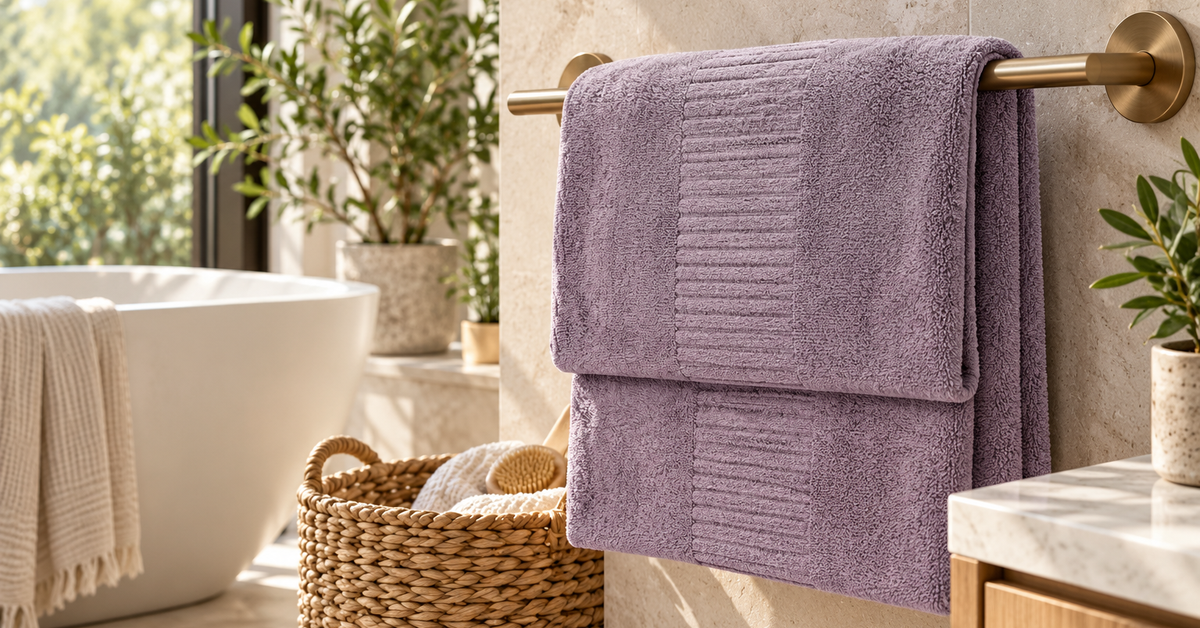
The SEISSO PRO XL listing identifies the towel as 35×63 inches. Confirm the current material and care instructions on the product page and sewn-in label; do not assume every color or towel set uses the same washing directions.
Use the recommended detergent amount
Follow the detergent label and your washer’s guidance for load size and water conditions. Extra detergent is not automatically better for a thick towel. Measure rather than pouring freely, and avoid adding bleach, softener, or other laundry products unless both the towel label and product instructions allow them.
If the towel feels coated or does not rinse cleanly, check the detergent amount and selected rinse options before changing temperature or adding chemicals. Care requirements vary by fabric and finish, so the product label should decide.
Choose a cycle that allows the towel to move
Select a cycle compatible with the care label and the washer. A balanced load helps the machine spin properly; if the towel bunches to one side, pause and redistribute it as the appliance manual permits. Avoid exceeding the washer’s load limit to save a cycle.
Do not assume a “quick” setting suits every large towel. Soil level, fabric instructions, and load size matter. Use the washer’s guidance when an unbalanced-load warning appears rather than repeatedly restarting a packed drum.
Rinse and dry without compressing
Check the towel after washing for visible detergent residue and follow the label’s drying directions. Shake it out gently and spread it on a rail or use the recommended dryer setting. Give the fabric room to move and dry; do not leave it compressed in the machine after the cycle.
If the towel remains damp, improve spacing and airflow and review the care label before applying extra heat. Do not dry it directly against a heater or open flame.
Keep a repeatable laundry routine
Record the cycle and settings that work for the towel and your washer, then use them consistently. Inspect seams and loops periodically, and address snags gently instead of pulling them. Store the towel only after it is fully dry.
Check the live SEISSO PRO product page and sewn-in care label for current materials, size, and washing guidance. When appliance instructions differ from a generic tip, follow the appliance and textile makers.
Frequently Asked Questions
Can I wash two oversized towels together?
Only if the washer has capacity for both to move freely and the care labels allow the same cycle. Split them if the load is crowded.
Should I use fabric softener?
Follow the towel label and washer guidance. Do not assume softener is suitable for every towel.
Why does a large towel stay damp after washing?
Crowding, an unbalanced load, or limited airflow can contribute. Check washer capacity and drying space.
Product details: SEISSO Oversized XL Bath Towels, 35x63, Quick-Dry