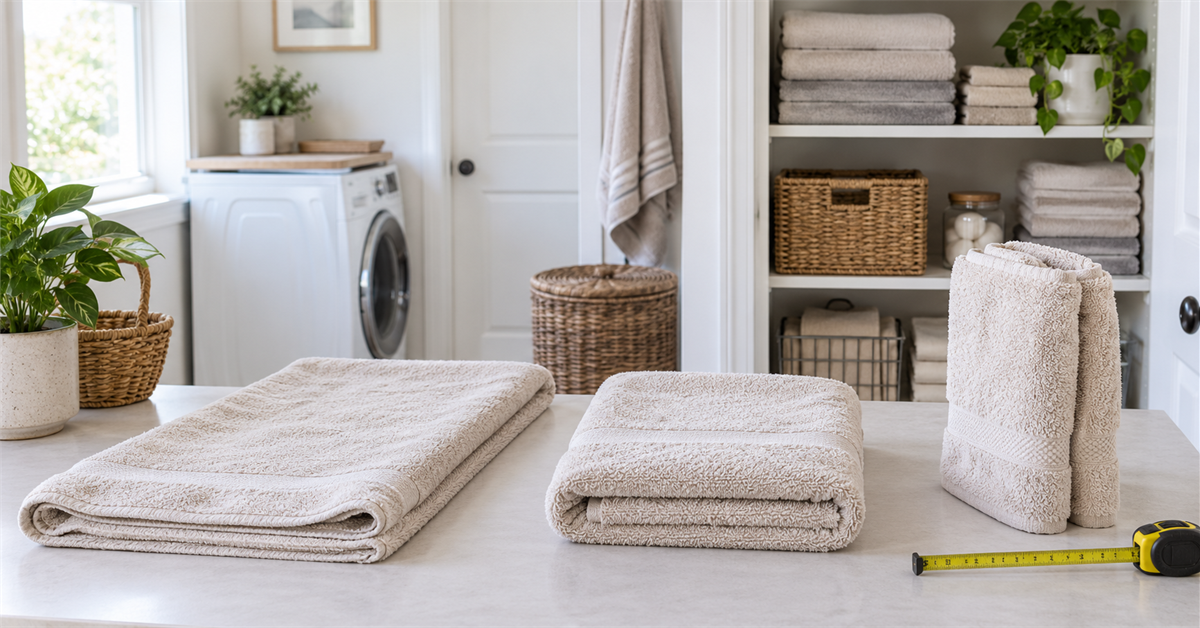
To learn how to fold oversized bath towels, start with the shelf rather than the towel. Measure the usable width, depth, and height, then build a folded rectangle that fits those limits. For a 35-by-63-inch towel, lengthwise thirds followed by two or three crosswise folds create a compact shape without an unstable stack.
Key takeaways
- Measure the real shelf space, including hinges and door clearance.
- Fold every towel to the same final footprint.
- Store only fully dry towels and avoid packing the shelf tightly.
- Choose stacking for deep shelves and file folding for bins or short piles.
Measure the closet before choosing a fold
Record the shelf width, depth, and vertical clearance. Subtract space for a door hinge, shelf support, lip, or basket handle. The remaining dimensions are your target folded footprint. A towel that fits the shelf on paper may still catch the door if the pile bulges forward.
Decide how many towels belong on that shelf. Two large towels can use a broad, low stack; four may work better as two short stacks or upright folds in a bin. The current SEISSO oversized XL bath towels are listed at 35 x 63 inches with two-piece and four-piece options, so planning by the actual pack size prevents leftover towels from becoming a second untidy pile.
Prepare the towel before folding
Follow the care label, and make sure the towel is completely dry and cool. Folding a towel that still contains moisture can trap odor and makes a compact shelf less forgiving. Shake it out gently, smooth the edges, and place it flat on a clean bed, table, or other surface large enough for the full length.
The product directions call for washing before first use, washing with similar colors, tumble drying low, and avoiding bleach. The supplied care label remains the authority if it gives additional instructions.
Method 1: the compact thirds fold
- Lay the towel lengthwise with the long edges running away from you.
- Fold one long side inward by about one third.
- Bring the other long side over it to create a long narrow strip.
- Fold the strip in half crosswise.
- Fold it in half once more if the shelf depth and towel thickness allow.
Keep the edges aligned without compressing the loops aggressively. If the final bundle is too tall, unfold the last step and use a wider shelf footprint. A good fold should hold its shape when lifted but should not feel like a tightly packed cushion.
Method 2: a shelf-depth fold
For a deep shelf, make the final fold match the shelf depth. After forming the long strip, place one end at the back edge of the shelf and mark where the front edge would fall. Use that point to guide equal crosswise folds. This creates a clean front line and uses the depth that is otherwise wasted behind a shallow stack.
Test one towel before folding the rest. If it protrudes, reduce the final length slightly. If a large gap remains behind the stack, choose a longer rectangle or use the space for a low basket of washcloths rather than pushing towels into an unreachable area.
Method 3: file folding in a bin
A file fold places towels upright so each one can be removed without lifting a pile. Start with the lengthwise thirds strip, then fold crosswise into a rectangle that is just below the height of the bin. Stand the folded towel with the smooth edge upward.
This method works best when the bin supports both sides. If a towel collapses, make one extra fold or use a narrower container. Do not force an overfilled bin; excessive compression makes removal awkward and reduces air movement between freshly laundered towels.
How to keep a stack from leaning
- Place folded edges toward the aisle for a consistent front.
- Keep each stack short enough to remove the lower towels safely.
- Separate different towel sizes instead of stacking small pieces on top.
- Use a shelf divider if two stacks slide into each other.
- Refold a towel whose edge is trapped rather than pushing it back.
If a pile leans after only two or three towels, the final rectangles are probably different sizes. Use a simple cardboard template cut to the shelf footprint, or compare each towel with the first successful fold.
Choose a rotation system
Put clean towels behind or beneath the current stock and take the next towel from the opposite side. A first-in, first-out habit spreads use across the set. Assigning a color or shelf section to each bathroom can also reduce searching without requiring labels on every towel.
Keep spare guest towels separate from everyday rotation if they are used rarely. Before a visit, unfold and inspect them for freshness rather than assuming a long-stored towel is ready.
Common oversized-towel storage mistakes
Copying a small-towel fold
A standard fold may create an oversized bundle that is too deep or tall. Adjust the number of folds to the shelf and the towel.
Folding while slightly damp
Wait until the towel is fully dry. A small, crowded closet is not a good place to finish drying laundry.
Using one very tall stack
Tall piles lean and make the bottom towel hard to remove. Use two shorter stacks, dividers, or file folding.
Filling every inch
Leave enough room for fingers to lift or slide out a towel without dragging the entire pile forward.
Frequently asked questions
Is rolling better than folding?
Rolling can work in open baskets, but rolls may waste rectangular shelf space. Compare one roll with one folded towel in the actual closet before converting the whole set.
How many times should a 35-by-63-inch towel be folded?
There is no universal number. Lengthwise thirds plus two crosswise folds is a useful starting point; adjust the final step to your shelf depth and height.
Should towels be stored with the open edge hidden?
Hiding the open edge gives a cleaner appearance, but consistent size and easy removal matter more. Choose one orientation and use it across the stack.
Let the shelf define the fold
A reliable oversized-towel system begins with usable shelf dimensions, a repeatable final rectangle, and enough room to remove one towel at a time. Fold one test towel, adjust it in the closet, then use that successful shape as the template for the rest.