Start with the fiber information on the label
Searches for bamboo bath towels often lead shoppers to compare bamboo and cotton, but the name alone does not tell you the full composition. Read the product details for the exact fiber content and any blend information. Do not assume two towels with similar names have the same fabric, feel, or care needs. If the composition is not clear, check the current listing or ask the seller before buying.
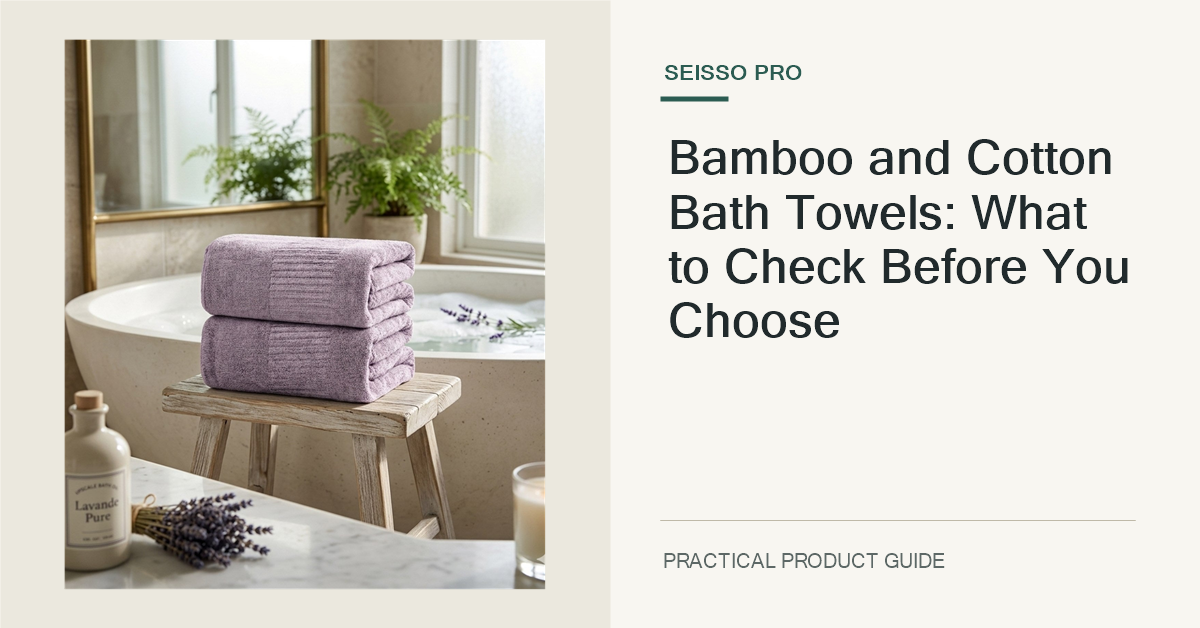
The SEISSO PRO towel featured here is listed as an oversized 35 by 63 inch towel. Use its published measurements and material description as your reference rather than inferring fiber content from the brand or the word “quick-dry.” This is especially helpful when comparing a towel set with a single bath sheet or when buying for someone with a specific fabric preference.
Compare dimensions with a towel you already use
Lay a familiar towel flat and measure its length and width. This gives a more reliable comparison than labels such as bath towel, bath sheet, or XL, which can vary between brands. A 35 by 63 inch towel offers a defined size to compare with the dimensions of your current towel and with the space available on your rail.
Think about coverage and handling together. A larger towel may provide more wraparound coverage, but it can also be heavier to lift when wet and take up more space in the washer. Check whether the person using it can comfortably unfold and hang it. Consider a hand towel or smaller option if the main need is a compact item for a narrow sink area.
Match towel weight and drying space to the room
Product listings may provide fabric weight or thickness, while some do not. When a weight specification is available, compare it alongside dimensions and care instructions; do not use thickness as a guaranteed measure of absorbency or drying speed. In a small bathroom, a towel that can be spread across the rail may dry more conveniently than one left folded over a hook.
Room ventilation, humidity, and laundry habits all influence how long a towel takes to dry. Leave space between damp towels and avoid storing one while it is still wet. If you use a heated rail or dryer, follow both the towel label and the appliance instructions. These practical details can matter more day to day than the fabric name printed in a product title.
Read care instructions before choosing a set
Check the wash temperature, drying method, and any restrictions on bleach or fabric softener. Fiber blends may have different care requirements, so do not transfer instructions from another towel you own. If your household separates colors or washes towels with other items, make sure the recommended care routine fits the laundry you already do.
Count the towels you need for regular use, guests, and laundry intervals before selecting a multi-piece pack. Compare the exact pack contents and size of each piece: a set may contain several bath towels or a mix of different formats. This avoids buying extra pieces that are difficult to store or insufficient quantities for the household.
Use a simple comparison before checkout
Make a short list with fiber content, dimensions, number of pieces, care label, and available hanging space. Compare each item against how you will use it after a shower, at the gym, or in a shared bathroom. When the product information leaves a detail unclear, verify it instead of relying on a general claim about bamboo or cotton.
After purchase, wash the towel according to its label before placing it into rotation. Check that the color, size, and feel suit the room and routine, and hang it open after use. A towel is a good fit when its verified specifications work with your coverage preference, laundry load, and drying setup—not simply because it has a particular fiber name.